
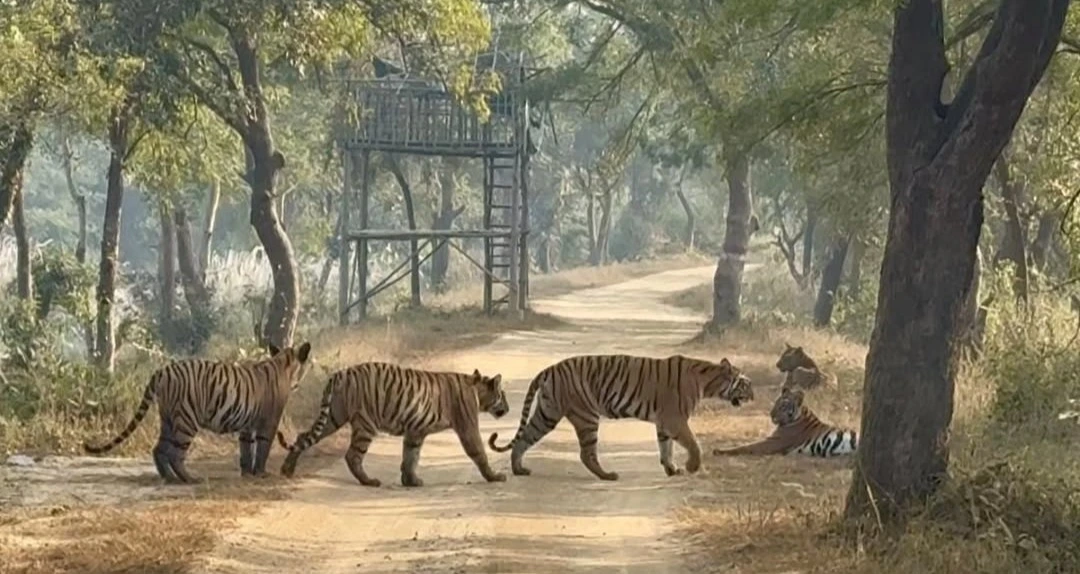
Nestled in the heart of Madhya Pradesh, Panna Tiger Reserve is India’s most inspiring example of wildlife revival. A forest that once lost all its tigers has today risen as one of the country’s strongest tiger landscapes-thanks to visionary conservation, careful monitoring, and the unmatched resilience of nature.
Known for its Ken River, gorge cliffs, granite canyons, tiger success story, leopards, and vulture-rich escarpments, Panna offers a raw, peaceful, and immersive wildlife experience unlike the more crowded parks of Central India.
This is your most detailed, evergreen, updated blog on Panna Tiger Reserve covering everything-from history, wildlife, zones, and safaris to conservation, culture, itineraries, and insider tips.
Located across the Panna and Chhatarpur districts of Madhya Pradesh, the reserve spans 1,598 sq. km including core and buffer areas. Established in 1994, Panna is the 22nd Tiger Reserve of India under Project Tiger.
While most national parks boast of their tiger populations, Panna is known for its resurrection. By 2009, the reserve had lost all tigers due to poaching, but through one of India’s boldest conservation missions, the forest has regained a healthy and stable tiger population.
Today, Panna stands as a global example of wildlife recovery, attracting researchers, conservationists, photographers, and travellers from across the world.
Between 2005-2009, the reserve faced:
By 2009, there wasn’t a single tiger left in the core area.
The Turning Point: Reintroduction Programme
A dedicated team from the Forest Department, assisted by researchers and local communities, began a tiger reintroduction drive:
This is one of the world’s most successful tiger conservation stories.
Panna lies in the Vindhyan mountain range, giving it a dynamic blend of habitats rarely found in one park:
This varied ecosystem supports diverse wildlife that thrives across altitudes, terrains, and vegetation types.
Panna is famous for leopard sightings, often seen on cliff edges, rocky outcrops, and near water zones.
With 300+ bird species, Panna is one of Central India’s richest avian habitats.
The Ken River alone hosts over 100 species including waders, raptors, and migratory birds.
The Ken Gharial Sanctuary near Panna is a major attraction.
Panna offers both core and buffer zones. Each has distinct experiences:
Panna offers various safari experiences:
A highlight of Panna:
Available in select buffer zones:
Great connectivity from:
A stunning canyon of pink, red, and black granite.
A monsoon-fed waterfall surrounded by caves.
Great for gharials, muggers & birdwatching.
The perfect cultural add-on to a wildlife trip.
One of India’s rare diamond mining regions.
Panna is home to:
The region is known for:
Panna Tiger Reserve is famous for its successful tiger reintroduction program, the beautiful Ken River, rich birdlife, dramatic granite canyons, and peaceful, uncrowded safaris. It’s one of Central India’s most scenic and biodiversity-rich forests.
Panna Tiger Reserve is located in the Panna and Chhatarpur districts of Madhya Pradesh, about 25 km from Khajuraho. It falls in the Vindhyan range and is part of the larger Ken River ecosystem.
The best time to visit Panna is October to March for pleasant weather and birdwatching. For the best tiger sightings, March to June (summer months) offers the highest visibility as animals gather around water bodies.
As of 2024–25 estimates, Panna Tiger Reserve has 50+ tigers, thanks to India’s most successful tiger reintroduction project. The population is stable with regular breeding.
The Madla Zone is considered the best for tiger sightings, river views, and diverse wildlife. Hinouta Zone is excellent for leopards and scenic exploration, while buffer zones like Akola are great for offbeat experiences.
By Air: Khajuraho Airport (25 km) is the nearest.
By Train: Khajuraho, Satna, and Mahoba are the closest rail options.
By Road: Panna is well connected to Khajuraho, Jabalpur, Satna, and Jhansi via highways.
Yes, Panna offers jeep safaris, full-day safaris, boat safaris on the Ken River, and night safaris in select buffer zones. Safari bookings can be made through the MP Forest Department website and authorized agents.
Yes. Panna offers a unique Ken River Boat Safari where you can spot gharials, crocodiles, water birds, and stunning river landscapes. This is one of the most recommended experiences.
Absolutely. Panna is one of the safest and most well-managed tiger reserves in India. The forest is peaceful, crowd-free, and ideal for families traveling with kids or seniors.
A 2–3 day trip is ideal.
2 days = 2 safaris + Raneh Falls/Ken River
3 days = 3–4 safaris + Khajuraho + waterfalls
Wildlife photographers may stay longer.
Apart from tigers, Panna has leopards, sloth bears, wild dogs, hyenas, sambar, chital, nilgai, gharials, crocodiles, and over 300 species of birds, including vultures and eagles.
No. Unlike popular parks like Bandhavgarh or Ranthambore, Panna is calm, serene, and less commercial. This provides a more authentic and peaceful safari experience.
Direct stays inside the core zone are not allowed, but excellent wildlife lodges are available around Madla, Toria, and Khajuraho, including luxury eco-lodges and mid-range resorts.
Panna Tiger Reserve is approximately 25 km from Khajuraho, making it one of the best short wildlife trips from the UNESCO World Heritage temples.

© 2026 | All Rights Reserved
Designed & Developed by Deepak
Please share your valuable inputs